Physical Literacy at Totum Life Science

For Your Information No Comments

Active For Life interviewed Totum co-founder Stacy Irvine about instilling the knowledge of fitness, or physical literacy, in children, and why it’s so important to the long-term health of both children and adults.

Click here to read the rest.

Top Health Trends for 2013

For Your Information No Comments
Stacy Irvine recently visited CityLine to look at the top health and fitness trends of the year ahead, including growing obesity, qualifications for fitness professionals, multi-purpose fitness equipment, and meditation.

Click here to watch the video.

Running Edition: How to Perform Your Best This Spring!

Fitness, For Your Information No Comments

by Dr. Erin Woitzik
Chiropractor and Personal TrainerErin-W-web

A change in season marks the transition from snowy streets to fast, smooth footing and shorts — revealing those strong legs you’ve been working on all winter long. With a sunny Around the Bay in the books; and the Sporting Life 10k, Goodlife Marathon, and many more just around the corner, the season of road races and triathlons are upon us. If you have a scheduled event approaching in the next two months, it’s likely you’ve put in much of the hard work and are entering the final stretch of your training program. You are achingly close to your longest of long runs, and are integrating speed work on your running calendar.

This is a critical time to remain healthy and injury free, and below are four key strategies for reaching your peak stride on race day.

1. Adding mileage and increasing training intensity requires greater muscle activity and increases joint loading during your training runs. As important as these final training runs are when approaching the end of your training program, rest is paramount. Follow up your long runs and high intensity speed runs with rest days or light cross training (such as yoga or Pilates). For most runners, a maximum of 5 training runs weekly offers the greatest return on investment. When in doubt, listen to your body! Rest allows your muscles and joints to repair and regenerate, and is critical when approaching an upcoming race.

2. The added stress of increased training volume and intensity also causes a natural, widespread inflammatory response in the body. Be sure to increase your intake of healthy fats (nuts, fish, and healthy oils), as well as ensuring a sufficient intake of fruits and vegetables. Special attention should focus on citrus fruits (high in vitamin C), dark/leafy greens (high in vitamin K), and tomatoes (containing lycopene – a potent antioxidant). Along with sufficient rest and sleep — the fuel you provide your body can keep you injury-free on the roads this spring.

3. Maximize your running efficiency. As the roads clear, naturally our stride lengthens and speed increases (as we have greater stability and trust in the road conditions). However, it is important that this increased pace is accomplished without increasing joint stress — and predisposing joint injury. Now is the perfect opportunity to work with a professional who can help fine-tune your gait and ensure you are efficient (ie. not wasting your body’s energy) on race day. Much like golfers use pros to hone in on swing details, runners will greatly benefit from a gait evaluation with a professional. Surprisingly enough, small adaptations can greatly improve performance outcomes.

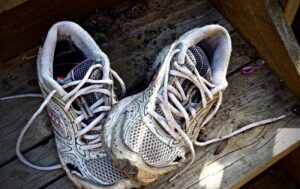
4. Check your footwear. Estimate not only the number of kilometres you’ve put on your current pair (generally recommended between 500-800km), but also ask yourself these two important questions: Do my shoes still fit as well as they did off the shelf? Are they still comfortable? These are the most important factors to consider when replacing shoes for an upcoming race. And if you do decide it’s time, make sure to leave at least one longer training fun to work in the new kicks.

With these tips, and your continued hard work, visualization of a healthy spring and summer on the roads is well within your reach. As always, for any concerns regarding pain or nagging injuries, it is important to form an alliance with a professional who can help you reach your goals. The professionals at Totum understand your concerns, because we’re runners too!

See you on the roads,
Dr. Erin Woitzik

Gonzalo Rivero

Get To Know A Totumite No Comments
Interview with a clinician – Get to know Gonzalo Rivero, RMT

Where did you do your schooling?

I did my education at Kikkawa College, here in Toronto. It was a two year program, and included courses such as myofascial release and pregnancy massage. We also did a lot of outreach programs to gain practical experience, such as Toronto Marathon,
people living with AIDS, and Variety Village. It was a very good program, and I definitely learned a lot. We had our own clinic, where the public could come and allow us as students to gain hands-on experience, which was really beneficial.

Have you done any additional courses since you’ve graduated?

I’ve done STR, which stands for Soft Tissue Release. It’s a technique where you shorten the muscle, apply pressure, and lengthen the muscle to get rid of scar tissue, adhesions, etc. I’ve completed the kinesiotaping course, Reiki courses, myofascial course, and introduction to acupuncture.

How would you describe your approach?

My approach for the first session is symptom relief. Often people come in for massage, and they have symptoms they’re looking to get help with. They don’t care if the fascia in the bottom of your foot is connected to the problem in their knee, they just want their symptoms to go away. My first session focuses on symptom relief with education, letting them know what is at the root of their problem, and how the treatment plan will ultimately address the root cause of their symptoms.

In general, for an acute problem, how many times do you like to see someone?

It all depends on the issues. Sometimes it is one or two treatments, and we’re done. Sometimes it’s a little bit longer. What I’ve found, especially working with someone who has an acute flare of a chronic condition like low back pain, is that sometimes shorter sessions (30 minutes) twice a week for a period of three weeks works really well for addressing the relief of their recent symptoms but also addressing the root of the problem.

Tell me about your experiences of working in different settings as a Registered Massage Therapist.

I’ve worked everywhere – good and bad! Looking back now, I see that even the bad places taught me things, which is good. I started off at spas, to get my foot in the door. I quickly realized that that wasn’t my cup of tea. I then moved to a clinic that had many clients with MVA injuries. From there I moved on to working with athletes and athletic teams, and theatre performers. I gained a great appreciation for dancers that I had never had before. In treating them, I realized that their injuries are sometimes worse than professional athletes. I also work often with soccer players. I’ve pretty much worked in all aspects of the massage profession.

Tell me about your work with the TFC organization.

I work with the young players in their development program. I have been a huge soccer fan my whole life, and I saw what the commitment this organization has for their youth. They’ve built a brand new facility for them, and it’s very encouraging for sports in
general, and especially for soccer in Toronto. By working with them, I gained experience with working with 10 different MLS soccer teams who need a therapist when they’re here in town. Chicago, Vancouver, Seattle, Salt Lake, just to name a few. It really jump
started my career in terms of working with professional soccer players. Working in that atmosphere, working closely with physiotherapists and athletic trainers at that level has been a great experience. Every summer I look forward to working with them. It’s been really positive for my career.

What do you think is the most common myth about massage therapy?

I think that the most common myth is that massage is always relaxing. People think massage, they think aromatherapy, music, relaxation. Sometimes, depending on the injury, the treatment can be fairly aggressive. I think education from the massage
therapist and from other health care professionals is really important to break that myth. I want people to understand that massage is a legitimate and effective way of treating most painful conditions.

During an assessment, it’s important to assess what the client is looking for. If they are looking for simply relaxation, that option is always available. But if they want their neck pain to go away, for example, it will require more directed treatment.

If there was one thing that you wish all of your clients would do, what would it be?

Their homework! Sometimes I feel like a grade eight teacher asking them if they’ve done their homework. Whether its exercises, change in their nutrition, or stretches, a lot of the time grown adults will tell me they have done them. When I ask them to
demonstrate, I know how my teacher felt when I didn’t have my homework done! I can tell when someone has or hasn’t done their homework. Even if they were doing it wrong, at least they showed commitment. It can be frustrating, and I let them know that I can
only do so much. If they’re not involved in their own rehabilitation, their symptom relief will only be temporary.

Tell me about one of your greatest client success stories.

When I was about six months out of school, I worked with a client who had long standing, chronic shoulder pain. I threw the book at her, and did everything I knew how over the period of about two months, but all she got was temporary relief. She could sleep better for a couple of days, and then the pain would return.

One day, during a treatment session, she just broke down and started crying. It was during a myofascial release. I did everything I was told to do, and tried to make her feel comfortable. She called me two days later and told me that her pain was completely gone. I really didn’t know what to think.

She came back the following week, and confided in me. In her past, her father would scold her and tug on her arm as a form of punishment. There was a lot of emotional connection to her shoulder. Her father had recently passed away at the time she was
being treated, and she felt a lot of anger that she had not had the opportunity to get out. This was a huge learning experience for me, in terms of learning the emotional component of physical body pain, as well as seeing what can be released through massage therapy. It was through developing a professional relationship, and once she felt comfortable with me, her body decided it was safe to release this tension. I learned that sometimes as therapists we need to step out of the ‘muscle box’ and recognize that the emotional component of our body can play a large role in the pain and symptoms that someone maybe experiencing.

As the end of the year approaches, is there anything that you would like to remind people of?

Everybody focuses on the buying of gifts, and they forget about themselves. It is a season to give, but its also a great time to focus on yourself and take care of that nagging knee pain, for example. Most people get busier during this time of the year, and symptoms can be magnified. Just be sure to take some time, look inward, and address whatever symptoms you may be having. Take the time to see your massage therapist, physio, chiro or whoever you see. Just be sure to take care of the problem now before the wheels fall off the cart!


Client Success – Alex James

Client Success Story No Comments
Alex James Totum Client Since 2012

FIFTY SHADES OF HAY
How I cut my body fat in half last summer
By Alex James

I didn’t really subsist on a diet of Bermuda grass and alfalfa sprouts all through the summer of 2012. All I did was turn away – permanently, I hope – from my much-loved cheeseburgers, fries and caramel sundaes, and exercise regularly. The bathroom scales had told me that I was gaining weight, and I was still this side of 30. If I didn’t change my eating habits now, I would be chubby at 40, and the mountain of weight-loss would be harder to climb. I resolved, therefore, to lose weight or more importantly, to reduce my body-fat percentage. Visually, I was still quite trim, weighing 160 pounds at six-feet-two, but a trip to the Bod Pod indicated that I had excess fat lurking inside. I was on my way to becoming a well-rounded person, but not in the way I would like.

I began my new life with one considerable advantage: my mother is a health nut. Recently retired from teaching, she takes daily walks, attends a twice-weekly dance class, keeps a food journal, eats whole wheat everything, drinks almond milk, buys probiotic yogurt, records her blood pressure in Excel, and even powers down her iPad at night so that the wireless waves won’t affect her brain – a case, my father says, of locking the barn door after the horse has bolted.

But she was my initial go-to person and, last May, taking her advice, I started exercising and carefully watching my diet. With the help of some cooking lessons, I also started to cook for myself, and I hired a personal trainer to keep me going back to the gym. This would be a three-month project, beginning May 24 and ending September 1: 101 days of healthy living or “energetic hay-eating,” as a friend of mine dubbed it.

To begin, I signed up with Totum Life Science in Toronto. Until then, I knew nothing about Totum, but I liked their website, and totum means ‘whole’ in Latin, which promised just the kind of holistic approach to health that I wanted. After discussing my goals with Sarah Maughan, a nutritionist affiliated with Totum, I agreed to follow a balanced food plan. There were certainly no burgers or fries on the list, but I was pleased to see that neither was hay. Sarah explained how to read the nutrition labels on the back of products, and told me to shop for myself, following her recommended guidelines.

My first stop, then, was a grocery store, where I loaded up on nuts, Greek yogurt, lean meats, and nine-grain bread. Buying healthy groceries was one thing, but I badly needed some kitchen skills, so I enrolled at Calphalon Culinary Centre next door to Totum. Calphalon offers courses in basic to advanced food preparation and cuisine, but I was realistic to know that I needed something really basic, so I began by learning to chop, slice, and dice vegetables, and to make such things as soup stock from scratch.

I was certainly nervous about cooking for myself. Since leaving home, more than a decade ago, I’ve lived entirely on fast food, and I mean entirely. I never cooked for myself, not once. Fast food may be cheap and convenient, but it is often loaded with unnecessary calories and additives, particularly salt, as my mother warned, and if I was going to take better care of myself, I would need to prepare my own meals – without a side order of salmonella.

This was a more ambitious task than I expected. We’re talking here of somebody who barely knew how to turn on a stove, much less cook a soufflé. I didn’t even know that a garlic clove is one part of the bulb and not the whole thing – something worth knowing when you entertain friends in the evening. I also discovered, not unreasonably, that while food preparation can be fun, cleaning up afterwards is a chore – and the two inevitably go together.

Stu Goldie was my personal trainer at Totum, and for 13 weeks, three times a week, he made sure that I exercised regularly and safely. In every respect, Stu was a professional, and under his guidance I learned a lot about pacing myself at the gym.

Before I began with Stu, however, I went to see Dr. Shannon Lee, a Chiropractor and fitness and lifestyle specialist at Totum’s Performance location in Rosedale. To measure my body fat percentage, Dr. Lee used a Bod Pod, a cutting edge machine out of Ridley Scott’s Alien and shaped exactly as its name implies. Using air dispersion technology, the Bod Pod separates your weight into two components – fat and the rest of you (that is, your lean body mass) – and is considered the most accurate way to measure body fat, to within +/- 2%. After a few minutes with me inside, the machine printed out my stats, and Shannon’s right eyebrow rose quizzically. I weigh 160 pounds, of which, apparently, 49 were fat – that is, I was 30% body fat or ‘skinny fat’ as Jane Lynch would say, not the worst result by any means but not a good one, either. Inside, my arteries were narrowing and some of my organs had worrying deposits of fat. It was indeed time to change my eating habits before my eating habits changed me.

My goal, then, was simple: to erase 10 years of fast food consumption in thirteen weeks. I was lucky I had Stu for an instructor, because the exercise regime was no walk in the park. I needed every word of encouragement Stu gave me: crunches, push-ups, twists, squats, weights – you name it, I did it, and not always willingly.

Stu is a master of his craft, and he gave me just the right mix of encouragement and exertion to see me through my 13 weeks. Training, Stu told me, is all about addressing the bottleneck, or weakest part, of the body. If we focus on increasing body strength there, we can move on to the next weakest link, gradually improving our overall condition over time.

Despite a lifelong allergy to exercise, I made it through my 13 weeks without missing a single session, thanks largely to Stu’s encouragement. Midway into those weeks, however, I went back to Shannon and the Bod Pod. Stripped to my boxers and wearing a head cap to keep my hair from influencing the measurements, I waited for the machine to do its thing. “You’re gonna be happy with this,” Shannon said, showing me the results. I’d lost 9 pounds of fat but gained 9 pounds of muscle. I looked and felt the same, but my body fat had decreased by 5 percent within six weeks!

Encouraged by this result, I was determined to finish what I had started. By this point, I was consuming more food in a week than before and was always hungry, so Sarah tweaked my food plan, adding just enough to sate my appetite but not enough that I would squirrel away fat.

Stu had warned me that there would be a point of diminishing returns – that is, I shouldn’t expect ever-better results. But my final test in the Bod Pod was even better than I expected. By the beginning of the thirteenth week, I had lost another 13 pounds of fat and gained 11 pounds of muscle. Overall, I had lost two pounds. The really important figure, though, was 17, the percentage of body fat. I had dropped from 30 to 17, almost halving my body fat.

The hardest part of weight loss is finding the motivation to see it through. I needed Stu, Shannon and Sarah not just for their expertise but for the encouragement and discipline they provided. Because I experienced almost no weight loss, I would never have known the progress I was making by stepping on the scales or looking in the mirror. The changes in my body were hidden but they were important nonetheless. What is more, I learned that a healthy lifestyle with regular exercise and sensible eating doesn’t have to be dull or boring. It was – and, I’m sure, will continue to be – enjoyable and challenging, and not at all like living on fifty shades of hay.

My thanks to:
Sarah Maughan, Registered Holistic Nutritionist. http://www.sarahmaughan.ca

Stu Goldie, Personal Trainer, Totum Life Science, 445 King Street West, Suite 101, Toronto Street West, Suite 101

Dr. Shannon Lee – Totum Performance Director / Chiropractor / Personal Trainer

Laura White, my boss – for giving me the flexibility at work to pursue the new me

And my mother – who uses her iPad, sensibly

Looking for a great Fish Oil Supplement?

Totum Recommends No Comments
Nutrasea: An Amazing Fish Oil, by Andrea Fairborn, Registered Holistic Nutritionist and Pilates Instructor


We have been informed from the media and from our health care providers about the importance of Omega 3 fats. Why? These amazing fats work to lower triglycerides and blood pressure, maintain optimal nerve function, reduce inflammation, support a healthy immune response, improve circulation, suppress activation of stress hormones, promote a healthy glow to your skin and increase your metabolism. Omega 3’s really do the body good! These are facts.

It is also a fact that many people’s diets are lacking in these essential nutritional components. If that sounds familiar, why not consider taking a supplement? With so many different brands available in the market place it can be a daunting task to find a product that is pure and has premium potency. The brand that I recommend and personally use is Acenta Nutrasea. Totum is proud to carry this product and it can be found at the King Street and Roxborough locations.

Nutrasea is a pharmaceutical quality fish oil that contains an ideal balance of EPA and DHA. It is derived from anchovies, sardines, and mackerel and has been tested for heavy metals and any other containments. You will feel good knowing that it is a pure source of Omega 3. Nutrasea comes in a liquid form for utmost absorption. Liquid supplementation is excellent as you can receive all of the recommended allowance in just one dose, as opposed to taking multiple gel capsules through out the day. What is also great about liquid Omega 3 is you can add it into any cold food (this product should never be heated). Feel free to mix it into your yogurt, add it into your salad dressings, or blend it right into your morning smoothie.

You will find a variety of different flavours to chose from. We carry the Lemon flavour (500 ml) Apple flavour (500ml) that also has 1000 IU of Vitamin D. If you are a Vegan, we also carry the Vegan product (200ml). The source of Omega 3 is Algal DHA, from marine algae which has been noted to contain 20 times more DHA than flax. The great thing is these do not have a ‘fishy’ after taste.

Nutrasea ingredients are: pharmaceutical quality fish oil from sardines, anchovy and/ or mackerel, all natural flavouring, natural tocopherols (compounds of Vit. E ) derived from Non GMO soy.

One daily dosage contains 1500 mg of total Omega 3 ( 750 mg of DHA and 500 mg of EPA) Nutrasea recommends 1 tsp daily for adults and adolescents 14 years and older. For children 1/2 tsp is ideal.

For more information on Nutrasea you can access their website at ascentahealth.com

References

www.ascentahealth.com

Client Success Story

Client Success Story No Comments
Lee-Ann Siu, Totum Client Since 2010

In her late 20’s, it became clear to Lee-Ann that she needed to restore balance to her life. She was burnt out from working long hours as a lawyer, and choosing not to make time for herself was having an impact on all areas of her life, most notably her health. She quit her job and vowed to reboot her life. She made time for herself, her health, and made a priority of spending time doing the things she enjoyed with the people she loved.

Before making the decision to invest in her health, she had frequently walked by Totum (Roxborough), and thought, “This is a place for beautiful people who are serious about their health!” Although she was initially intimidated, Totum was the only place she considered when she decided to get serious.

With the help of Sarah Maughan, her nutritional guru, she drastically changed her eating habits. Perhaps more importantly, Sarah helped to change the way Lee-Ann thought about food. Sarah encouraged her not to think just about calories, but more about the quality of fuel she was ingesting when she was eating as well as thinking about why she was eating.

The other half of Lee-Ann’s Totum “dream team,” Aida Estacio, worked on making her a strong, fit woman. Using her background in Pilates and strength training, Aida crafted rotating workouts that were challenging both on a physical and mental level. After certain workouts, Lee-Ann would be spent and sore, but would feel a lightness that comes when you shatter the limitations you place on yourself about what you are capable of doing.

Using Totum’s Bod Pod, she was able to see that effective eating and exercise meant that the weight she was losing represented close to 100% fat loss, and that she wasn’t losing any lean muscle mass.

Lee-Ann feels it is so much easier to succeed when you are supported by team members who, “…aside from being ridiculously beautiful and fun, have a sincere interest in helping you to be your best, and who are genuinely proud of your accomplishments”.

After investing the trifecta of time, energy, and financial resources into her health, her investment has “performed well,” and allows her to enjoy an active lifestyle. In 2011, Lee-Ann and her husband decided to spend their honeymoon biking in Croatia. She was able to keep up with her husband – a yoga teacher and former national judo champion (read: athletic guy) – on the steep hills in the Dalmatian islands.

A month ago, they celebrated their second wedding anniversary by doing a grueling five-day trek in Peru (see picture above). Thirty-five pounds lighter than when she started at Totum, she proudly sweated and grunted her way up steep, humid jungle ascents and through high-altitude mountain passes – and thoroughly enjoyed every sweaty moment.

Now, she looks back on her initial intimidation and thoughts about Totum, and realizes that her assumptions were not true. She thought Totum was only for people who already had a high level of fitness, were naturally athletic, and/or devastatingly attractive. However, her Totum team, as we do for all clients, started at Lee-Ann’s unique beginning, and helped her transform into a healthier, happier version of herself. Well Lee-Ann, we are just as happy for you. Congratulations on the incredible change!

An Introduction to Dynamic Stretching

Fitness, For Your Information No Comments

What you may have missed out on while the coach was making you do push-ups
by Nick Wilson, PT

Growing up playing a lot of team sports, I was always taught to stretch before a practice or a game. This ritual would usually involve running a few laps, then standing around in a big circle, laughing at each other as we tried not to lose balance stretching our quads. Over the years pre-game stretching routines have evolved, moving to more functional, more sport-specific models.

Traditional static stretching involves holding sustained stretch positions, typically for 30 seconds or longer, and repeating several reps over various muscle groups. While this can be effective in elongating our muscles and increasing flexibility, prolonged static stretching has also been shown to reduce our ability to generate explosive force during sport, possibly even increasing potential for injury. Having said that, there is certainly still an important place for static stretching in athletics. In recovery from injury or in cases of significant flexibility dysfunction, it can be very important to address imbalances in tissue extensibility as guided by a rehabilitation professional. The argument here is not to never stretch in this way, but simply to reserve this type of slow, prolonged stretch for non-competition days.

When we prepare to hit the field, what we really want is to warm up and prime our bodies for what we need to do. This takes us to dynamic stretching, which looks more like a series of yoga-like positions and light field drills. Dynamic warm up routines have shown flexibility gains similar to those of static stretching, at the same time improving force generation in activities like the high jump. It only makes sense that by practising the movements we want to make on the field, we should be able to perform them more easily in a game situation.

A typical dynamic warm up should include the following:

1. Something to get the heart rate up, like a 5-10 min jog, jump rope, or jumping jacks.

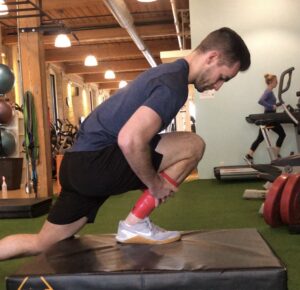
2. The routine should then incorporate 5-10 movement patterns specific to the sport. In soccer for example, carioca (grape vine), walking lunges, inverted hamstring walk, side lunges, and inchworms would be a good start to promote lower body mobility, and to open up the hips allowing for cutting and shock absorption with landings.

3. Each movement pattern should be repeated 8-10 times, moving smoothly through start and end positions without a prolonged hold.

While flexibility is part of the focus, there is also a great amount of balance, co-ordination and focused concentration kicking in right before game time, further preparing us physically and mentally for competition.

More importantly in my own practice, dynamic stretching is a lot less boring. Instead of standing around in a circle, you’re already on the field getting ready for action. Playing soccer twice a week, I religiously go through my dynamic warm up before every game, and have somehow remained injury free despite my reckless-abandon style of play. When I teach this kind of warm up to athletes and teams, we spend a lot of time laughing and loosening up, though most of them are surprised at how much a warm-up routine can actually make them sweat.

In considering a dynamic stretching routine for your sport, you will want to take into account your level of experience and skill with this type of warm up. New movement patterns often take practice to complete with correct form, and while stretching is not always comfortable, the warm up should not be truly painful. A physiotherapist, personal trainer or coach can help instruct you in initiating a safe and effective dynamic warm up. Have fun!

Running Injuries: Things they didn’t teach you in high school

Fitness, For Your Information No Comments

by Kirsten Jones, Physiotherapist

Jennifer C./Flickr Creative CommonsChange comes to every sport, even in a sport as simple as running. As with everything in medicine and sport, commonly held perceptions on how to train change with new research, thus enabling different training protocols to be developed. What we were taught in high school in terms of training has changed, and what is held as the absolute truth changes every decade it seems. It takes a while for us to change habits, especially habits that are so carefully taught to us. Below are how some of our running protocols have been adapted to research from the last few years.

Warm up: a warm up is important to prepare your body for the upcoming workout. If you are just doing a short run, your warm up can be just a 5-10 mins light run, before your  proper pace. If you are doing a very long run or a race, a warm up should be around 15- 20 mins consisting of a progressive jog, then some functional ballistic stretches – movements that are similar to actual running, like bounding, walking lunges, and can also include progressive acceleration work, such as running 30m, up to 110% of the expected workout speed, with walking interspersed. The thing NOT to do as a warm up, though, is stretching. There is evidence that concludes that stretching as a warm up has a negative influence on speed, strength, and explosive movement. Stretching is important to do – regular flexibility training will absolutely help with speed, strength, jumping, and injury prevention – but the stretching should be done outside of your workouts, not before a workout or run. Stretching before an activity doesn’t decrease the risk of injury, and some studies show stretching might even increase the risk. Having said of all this, there are always exceptions. In this case, stretching before exercise is advisable if you have a tight muscle causing an injury. In that case, by all means, stretch the muscle before, but only that particular muscle, or whichever were advised by your physiotherapist.

Surface to run on: the presumption is typically that running on a flat surface, or even treadmill running, is better on your joints. Alas, not necessarily the case. Many injuries are developed from repetitive strain, a result of repeating the same improper biomechanical movement over and over on a flat, unchanging surface for a prolonged time. If you can change your run around, by adding hills, running trails, doing sprints, it means muscles and joints will be used in a different pattern. This can take away from the repetitive nature of running, and help minimize injury.

Frequency of running: Our bodies have to adapt to running longer distance, and we do that by gradually increasing a load in proportion to our body’s ability to adapt to the new load. If we go beyond that, we sustain injuries. I don’t think it’s news to anyone to increase distance gradually – about a 10% increase in volume in a week is about it. The weekly long run should only increase by about 10 mins week to week. What is interesting is a change in training pattern where rather than training with a couple medium runs and a long run, it’s thought to be better to run often, but shorter distances. Your weekly total distance should be the same but spread over around 6 runs, rather than (for instance) 3 runs. Adaptation works by constantly challenging your body, but only within its capacity for change. Rather than cranking out these huge runs periodically, doing more frequent, smaller runs are more efficient for your body to adapt to. This is useful if you are changing a running pattern. If you are trying to increase your speed, train a new stride pattern (ie changing to minimalist running), train weaker muscles after an injury, or you’re simply a beginner to running, it’s found to be a safer, less injurious approach.

Hydration: water intoxication (yup – it exists) happens when too much water in consumed, and essentially dilutes the salts in our blood to a dangerous level. Its symptoms most commonly include confusion, fatigue, nausea, headaches, vomiting, and muscle cramps. Water intoxication is also called hyponatremia, and can have severe effects, leading to seizures, coma, and death. This is most commonly becoming a concern in marathons, triathalons and ultra distance sports to the point that race organizers in some countries are limiting the number of water stations – they are emphasizing consuming significantly less water than has been encouraged for years. You should take in about 400mL to 800mL of water during exercise, although honestly this varies depending on the source you are reading. What you have to do is take in what you are losing. If you weigh yourself before and after a long run, you may notice you’ve lost 2-4% of your body weight. Many participants after a marathon or triathalon actually weigh more after a run, because they have taken in too much fluid. This drop in body weight gives you an idea of what you should replace, though. What this means in reality is that if you are out in our present weather for a run that is less than 60 mins, you likely don’t need any extra water. Drink something before you leave, and when you get back, but you don’t need anything during the run. Stop with the running water belts – you likely don’t need it, and honestly, they’re really annoying to run with anyhow. All you need is a TTC token/cab fare stuck in your shoe, for those times when running back just isn’t going to happen (I swear, I’ve never had to use it!)

Cross Training: If you are training for a race, it doesn’t just have to be running. Cross training is great to do for a couple of reasons. You can decrease the repetitiveness of your training with cross training, thereby decreasing some risk of injury – and we all get a bit sick of running sometimes, so mixing up is a nice change. If you are training for a race, you can exchange about 35% of your workout for a cross training activity.

In terms of physiological load, 1km / 5mins running is equal to about
– 10 mins outdoor cycling/spinning
– 7.5-10 mins cross country skiing
– 5 mins aqua jogging
– 5 mins swimming

If you are injured, complete rest is seldom necessary – you’ll help your return to running by doing a cross training activity that doesn’t cause pain. Try something new, and move away from all our previously held notions. As with everything, you have to do what feels best for you. I have had patients who refuse to stop stretching before a workout, because they know they feel better after if they’ve done it. I’m not going to pull out a study and argue with them. Do what feels good, but temper it with some of the new approaches. Adaptation: we all have to adapt…even Monsieur Sauve, my old gym teacher back home. Especially my old gym teacher.

An Introduction to Complex Training

For Your Information No Comments

by Shawn Walker, NSCA CSCS

In practically every anaerobic sport the development of power is essential to improved performance. When in the gym training for power, the use of plyometrics is a well-known and effective way to improve explosive speed for athletes. However, research suggests that the combination of resistance training and plyometrics elicits improved power development [1].

Complex Training is a combination of resistance training and plyometrics, which should be done in that specific order. The muscles that are targeted during explosive movements are the fast twitch (Type IIb) muscle fibers. The increased load of resistance exercises stimulates the central nervous system and improves the rate of power production from our fast twitch muscles during plyo’s [2,3]. It is incredibly important to focus on quality reps and technique because these exercises need to be performed as explosively as possible.

When introducing Complex Training into your routine you should already have a base level of strength. If you never do squats then don’t start combining squats with plyo’s right away, perform at least 4 to 6 weeks of resistance training before beginning your routine. For the first 6 weeks of Complex Training the load should be a 10 to 12 rep range with 3 minutes of rest before engaging in plyometrics for 10 to 12 reps. Here’s an example of an Introduction Complex Training routine:

  • Perform 3 sets with 90 seconds rest between sets
  • Back Squats x 10 reps – 3 minutes rest – Vertical Jumps x 10 reps
  • Bench Press x 10 reps – 3 minutes rest – Clapping Push Ups x 10 reps
  • Romanian Deadlifts x 12 reps – 3 minutes rest – Horizontal Jumps x 12 reps
  • Lat Pulldowns x 12 reps – 3 minutes rest – Medincine Ball Slams x 12 reps


Studies of Complex Training have shown that an optimal rest time between resistance exercises and pylo’s is 3-4 minutes when aiming to improve explosive power [4]. However, after your first 6 weeks of general conditioning these exercises can be performed consecutively with longer recovery between sets [5]. Once you have reached this point, the explosive movements should become more sport specific and rest periods between sets longer at 5 minutes. Here’s an example of a more advanced Complex Training Routine:

  • Perform 3 sets with 5 minutes rest between sets
  • Back Squats x 6 reps – no rest – Depth Jumps x 6 reps – 5 minutes rest
  • Bench Press x 6 reps – no rest – Plyo Push Ups x 6 reps
  • Romanian Deadlifts x 6 reps – no rest – Speed Skaters x 10 reps
  • Lat Pulldowns x 6 reps – no rest – Overhead Medicine Ball Throw x 10 reps


  1. http://www.ncbi.nlm.nih.gov/pubmed/18076257
  2. http://www.ncbi.nlm.nih.gov/pubmed/16882633
  3. http://www.ncbi.nlm.nih.gov/pubmed/18076257
  4. http://journals.lww.com/nsca-jscr/Abstract/2006/08000/The_Optimal_Complex_Training_Rest_Interval_for.3.aspx
  5. http://journals.lww.com/nsca-jscr/Abstract/2000/11000/Electromyographic_and_Kinetic_Analysis_of_Complex.13.aspx


Shawn Walker is a Personal Trainer and Strength and Conditioning Coach at Totum Roxborough. If you would like to introduce Complex Training into your routine, Shawn Walker can be reached roxstudio@totum.ca to book a training session.